Showing posts with label Living Healthy. Show all posts

Thursday, April 21, 2011

Immunity Boosting Muesli

100% maple syrup is a natural sweetener that is high in manganese and zinc, important immune system allies.  Ground flaxseeds are the richest plant source of the inflammation fighting omega-3 fatty acids.  They contain fiber, which improves insulin sensitivity and wards off fat build-up.  Greek yogurt has about double the amount of hunger-controlling protein and fewer carbs than regular yogurt.  Plus probiotics to support your immune system.

Ready in 5 Minutes (not including overnight prep) *Makes 2 Servings

½ cup old-fashioned oats
1 cup nonfat plain Greek yogurt
1 Tbsp ground flaxseeds
1 Tbsp crushed almonds
1 tsp cinnamon
1 cup fresh mixed berries
1 Tbsp 100% maple syrup

Stir oats into yogurt.  Mix in ground flaxseeds and crushed almonds.  Stir in cinnamon and mix.  Toss in berries and stir in syrup.  Refrigerate overnight.

Nutrients per serving:
Calories: 242, Total Fats: 0.5g, Trans Fat: 0g, Cholesterol: 0g, Sodium: 36mg, Total Carbohydrates: 36g, Dietary Fiber: 5g, Sugars: 18g, Protein: 16g, Iron: 1mg

From the April 2011 edition of Oxygen Magazine

Tuesday, April 19, 2011

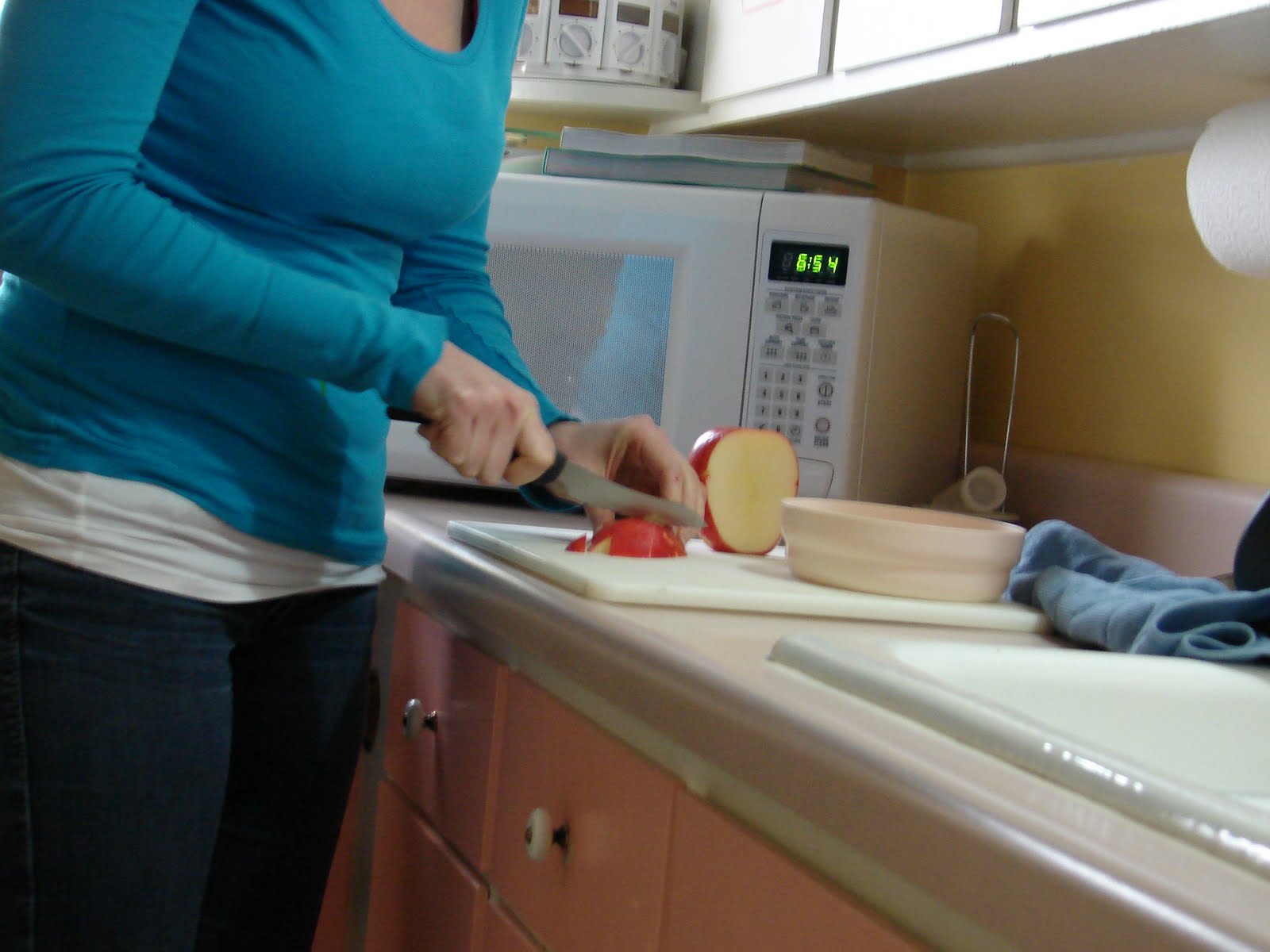
Once Upon A Time...

There lived a pint sized

P90X loving

Tony Horton quoting

Prince named Ethan


All he wanted was a snack

A crisp

Juicy

Red


Apple

So he went to the kitchen

And found just what he was looking for

But try as he might

 This is all that happened...


So his mother

The most beautiful queen

To ever have lived

Cut and chopped


And

Cut and chopped


 So he could have these


and live happily ever after

Once more

Wednesday, April 13, 2011

How to Trick Yourself Into Eating Healthy Food!!

By Denis Faye

In a perfect world, countries would stop fighting, cars would emit rose-scented oxygen, and broccoli would taste like chocolate cake. Sadly, that's not the case. But there's always hope. Beachbody® may not be able to stop wars or global warming (yet), but we can certainly give you a few tips on getting your veggies to taste better. It's easier than you think.

Vegetables

There are a number of books on the subject of sneaking healthy foods into kids' meals, including a few The Sneaky Chef titles and Jessica Seinfeld's Deceptively Delicious: Simple Secrets to Get Your Kids Eating Good Food. Basically, the same principles you'll find in these books apply to grown-ups. The only difference is your mind-set. Given that you're the one who'll be doing the cooking, you won't really be sneaking healthy foods into meals—you'll just be altering healthy foods to suit your tastes.

There are other easy ways to make sure you get your veggies, including taking green nutritional supplements and drinking everyone's favorite prebiotic, micronutrient-packed nutritional shake, Shakeology®, but remember that most healthy diets are supposed to be made up primarily of fruits and veggies. If you can drink your Shakeology and sneak a couple of servings of cauliflower into your Texas chili, you'll be in great shape.

The goop
The gist of the Sneaky Chef and Jessica Seinfeld cookbooks is simply to steam veggies for 10 to 15 minutes, throw them in a blender or food processor with a couple of tablespoons of water, and puree them into a fine goop. Then you introduce the goop into foods that overwhelm its veggie-goop flavor. It's that easy.
Although the books offer a near-infinite variety of goops, I'm going to boil it down (so to speak) to two goops.

White goop. Most of the time, this is cauliflower, although some people throw a little zucchini in there. It's the most flavorless of the goops, and it's ideal to mix into anything with a cream- or cheese-based sauce, like pasta Alfredo or mac 'n' cheese.

Green goop. Anything green can go into green goop, but I find that broccoli and spinach work best. Green goop works well with red (or reddish) sauces, like chili, marinara, or pizza sauce. You can also throw a massive layer of green goop into lasagna or manicotti and have your dinner guests be none the wiser, yet all the healthier. I've never tried it in enchiladas, but I'm guessing it'll work there too.

Bonus pesto goop recipe! Pesto is incredibly easy to make from scratch and impresses the pants off of anyone who doesn't know how to make it. And the best thing about it is that its rich, complex flavor makes it easy to tweak, so you can sneak a little healthiness in the form of iron-packed spinach onto your unsuspecting dinner guests' plates.

1-1/2 cups packed basil
1-1/2 cups packed spinach
1/3 cup grated or shredded Parmesan or Romano cheese
1/3 cup olive oil
1/3 cup pine nuts
3 cloves garlic, peeled and chopped

Directions: Mix ingredients into a paste with a food processor or blender. Done!

The split
If you've eaten enriched flour pasta and white rice your whole life, it's understandable that brown rice and whole wheat pasta would taste weird. After all, brown rice and whole wheat pastas have flavor!
The solution is simple. Make a 50/50 mix. It's half as healthy, but it also tastes half as different. Once you're used to that, cut the white out and go 100 percent brown. You'll never look back.

Bonus Split Tip! Next time you make mashed potatoes, go half potato/half yam or sweet potato. You'll be adding flavor, which means less need for salt and butter. Also, you'll be adding the fiber you're probably not getting enough of, especially if you don't like veggies.

Miscellaneous strategies
While all the stuff I've mentioned works great for fussy eaters young and old, keep in mind that at your age, techniques for sneaking healthy food into anyone's daily diet shouldn't always have to be so covert. Here are a few ideas that are slightly less sneaky but effective nonetheless. Do any or all of these and you'll be adding a very subtle taste to a strong, rich food.

Carrot juice in your apple juice. The former doesn't taste nearly as strong as the latter, but it packs a nutritional wallop that includes vitamins A and C, calcium, magnesium, and potassium.

Broccoli in your burger. Shred the broccoli florets and mix them into the meat. Yeah, you might still see them floating around, but after piling on the lettuce, onion, tomato, pickle, mustard, or whatever else you add, you're just not going to taste them.

Whole wheat French toast. Yes, this might change the texture, but who eats French toast for the toast part? Your taste buds will be so busy dancing with the fresh fruit and syrup you put on top, they won't have time to notice the nutritious, fiber-rich whole grains you're sneaking in.

No, we don't live in a perfect world. Pollution is a bummer, and there will probably always be countries that just can't seem to coexist on the same planet. But there's no reason why—with a little effort and a few tricks—nutritious and delicious can't live together happily on the same plate.

Friday, April 8, 2011

9 Appetite-Suppressing Foods!

By Whitney Provost

If you're like most people, conquering your appetite is one of the biggest challenges you face in your fitness and weight loss journey. As soon as the word "diet" crosses your lips, you may find yourself craving all the junk you know you're not supposed to eat. The secret is eating the right foods to help calm the cravings for the wrong ones. Adding these 9 easy-to-find, tasty foods to your meal plan can help you rein in your appetite before it gets out of control!

Rolled Oats

1. Oatmeal. This hot cereal is high in fiber and low on the glycemic index, which means it fills you up and takes a long time to digest. Research has shown that diets high in slow-burning carbohydrates like oatmeal suppress the hunger hormone grehlin more effectively than diets high in fat do. In fact, when you eat oatmeal for breakfast, you may find that your appetite is lower at lunchtime. Steel-cut or rolled oats digest more slowly than the "instant" variety do, so it's worth taking a few extra minutes in the morning to prepare your breakfast the old-fashioned way.

2. Apples. Not only are apples nutritious, but what sets them apart from other fruits is pectin, a soluble fiber that helps regulate blood sugar, keeps you full, and sustains your energy. One medium apple with skin contains 4 grams of fiber, which is more than you'd get in an average slice of whole wheat bread. Add an apple and some cinnamon to your morning oatmeal for an appetite-suppressing breakfast.

3. Pine Nuts. These edible pine-tree seeds contain more protein than any other nut or seed, and their oil stimulates two appetite-suppressing hormones (cholecystokinin [CCK] and glucagon-like peptide-1) that tell your brain you're not hungry. Blend pine nuts with basil, garlic, and a little olive oil to make pesto, or sprinkle them on your salad or oatmeal for a delicious, nutty crunch.

4. Salad. The fiber in typical salad vegetables like lettuce, cabbage, spinach, celery, cucumbers, broccoli, and peppers is very filling and helps slow the release of glucose into your bloodstream. Studies have shown that when people start a meal with a small salad, they eat significantly fewer calories in the meal itself. Just watch out for the high-fat dressings (or worse, fat-free dressings that are high in sugar). Try having the dressing on the side and dipping your fork into it for easy portion control, or simply add a dash of balsamic vinegar or a squeeze of lemon juice for a tasty, super-low-calorie option. Bonus tip: Try to eat a vegetable at every meal to keep your appetite at bay all day long.

5. Olive oil and other unsaturated fats. Researchers at the University of California at Irvine found that unsaturated fat causes the intestines to release a compound (oleoylethanolamide) that has been shown to reduce appetite and stimulate weight loss. Some great unsaturated fat choices include avocados, olives and olive oil, almonds, salmon, walnuts, pumpkin seeds, macadamia nuts, and sesame seeds. These foods are high in calories, so enjoy them in moderation while regulating your appetite.

6. Flaxseeds. Flax is one of the best plant sources of omega-3 fatty acids. The seeds are also very high in protein and fiber, making them excellent for appetite control. Sprinkle ground flaxseeds over oatmeal, salads, or yogurt, or add them to smoothies to help stabilize your blood sugar and turn off the hunger hormones.

7. Beans. The fiber in beans increases CCK, a digestive hormone that's a natural appetite suppressant. A research study at the University of California at Davis found that men who ate a high-fiber meal containing beans had CCK levels that were two times higher than when they ate a low-fiber meal. Beans also keep your blood sugar steady, which helps stave off hunger.

Whey Protein Powder
8. Whey protein. New studies suggest that whey protein stimulates the hormones that increase the feeling of being full. In one study, researchers at the University of Surrey in England found that people who consumed whey protein felt fuller and more satisfied with less food. Whey also stabilizes blood sugar, and that can help control food urges. Make a drink with Beachbody's Whey Protein Powder to calm your appetite any time of the day.

9. Spicy foods. Capsaicin, the ingredient that gives peppers their heat, can also help control your raging appetite. A recent study published in Clinical Nutrition suggests that capsaicin-rich foods may help you consume fewer calories, plus they help support weight loss by suppressing your appetite and making you feel fuller. You can add hot pepper sauce to tomato juice, stir-fry some Anaheim or Serrano peppers with other vegetables, or cook up some jalapeño or poblano peppers in your omelet. Other spicy ingredients may have similar effects, so try adding spices like hot mustard and curry to your salads and meats.

Monday, April 4, 2011

Motivation Monday!!

If you want to look and feel amazing then it is your responsibility, to yourself and all those around you, to do what you have to do in order to attain it. No excuses.

Wednesday, March 30, 2011

Turbo Fire/Shakeology GIVEAWAY Time!!

I am in the mood for a little giveaway...

How about a FREE Sample of Shakeology for everyone AND a chance to win a drawing for Chalene Johnson's NEWEST Turbo Fire workout "The Greatest HIIT's"!!

How do you enter?? It is easy-peasy my friends.

Head on over to TurboKristy.com and sign up for a FREE membership (absolutely zero purchase necessary!)  Then, email (find it under the contact tab) me the following info:

1.  Tell me a little bit about yourself.
2.  What workout program are you currently doing?
3.  What are your goals?
4.  What are your struggles?

That is all.  This giveaway is strictly for those I coach along their fitness journey so you MUST sign up at TurboKristy.com to be eligible.

Hurry fast!!  The drawing will be held on Friday April 8th!! Don't miss out!

Tuesday, March 29, 2011

The 5 Best Fats for Getting Lean

By Whitney Provost

You might think that to lose weight, you need to cut the fat out of your meals. After all, fat is higher in calories than protein and carbs, and low-fat diets have been popular since the Senate Nutrition Committee first recommended them in the late 1970s. But research shows that a moderate-fat diet (with about 35 percent of calories consumed coming from fat) will help you drop pounds permanently, feel full longer, and avoid bingeing. The trick is to eat the right kind of fat to increase satisfaction and boost weight loss. Here's why it's important to eat fat—and we offer five of the best fat sources to add to your diet.

Salmon

How eating fat will help you lose fat.

In 2008, researchers at Ben-Gurion University of the Negev in Israel found that people who followed low-fat diets lost less weight than people who followed low-carb or moderate-fat diets. The low-fat group lost an average of 6.5 pounds over 2 years, but the low-carb and moderate-fat groups lost about 10 pounds. Women did especially well on the moderate-fat diet, losing an average of 13 pounds during the study.
Fat is an important element in weight loss for several reasons:
  • Fat helps your body control blood sugar and insulin spikes after eating carbohydrates. Better sugar metabolism means less fat storage.
  • Fat slows down digestion and aids nutrient absorption. You'll stay fuller longer and get more health benefits from the food you eat.
  • Essential fatty acids (like omega-3s) may boost your metabolic rate and increase fat burning.
  • Fat tastes good. It also provides a "mouthfeel" that is satisfying, which can help you be happy with less food.
Eating more fat may also help you stick to your diet longer. In a study conducted by Brigham and Women's Hospital in Boston, participants got either 20 percent of their calories from fat or 35 percent of their calories from fat. After 6 months, both groups had lost weight. But after 18 months, only 20 percent of the people in the low-fat group were still following the diet, compared with 54 percent of the people in the moderate-fat group. Likewise, the subjects in the moderate-fat group had maintained their weight loss, while the low-fat group participants had gained most of the weight back.

If you reach for a box of low-fat or fat-free crackers or cookies because you want to lose weight, you may actually be sabotaging your diet. Manufacturers frequently replace fat with sugar in packaged food items to make them taste better. You think you're making a good decision by eating fat-free products, but the excess sugar and refined flour can lead to fatigue, cravings, mood swings, and weight gain caused by the overproduction of insulin—the fat-storage hormone. As a snack, a sliced apple with some peanut butter or a salad with oil and vinegar dressing would be a better weight loss choice. The complex carbs and healthy fats will maintain your blood sugar levels, boost your energy, and keep you satisfied longer.

What kind of fat should you eat? To get lean, you need to eat the right kind of fat. Avoid saturated and trans fats (which are found in red meat, full-fat dairy products, and many packaged foods), and instead choose monounsaturated and polyunsaturated fats. Here are some of the best sources of fat to help you reach your weight goal.


  1. Fish. Fish like salmon, albacore tuna, herring, mackerel, and sardines contains beneficial amounts of omega-3 fatty acids. Most experts agree that eating two servings of fatty fish per week is safe for people who are worried about mercury or other toxins. (Pregnant women should consult with their doctors about consuming fish.) If you don't like fish, a quality supplement like Beachbody's Core Omega-3™ will give you the benefits without the fishy taste.
  2. Olive oil. Heart-healthy oils like olive, canola, and peanut oil are excellent sources of fat for dieters. They have also been shown to lower bad cholesterol and reduce the risk of heart disease. Use them sparingly when sautéing, or drizzle them over your favorite salad or vegetables with a little vinegar and some herbs to maximize the absorption of nutrients. Moderation is important: You really only need about a teaspoon of oil to get all its benefits. Using more will add significant calories.
  3. Avocados. Eat a spinach and carrot salad with a little avocado, and you'll not only get a dose of good fat, but you'll also absorb more phytonutrients like lutein and beta-carotene. Scientists at Ohio State University in Columbus found that more antioxidants were absorbed when people ate a salad containing avocados than when they ate a salad without this tasty fruit. One-quarter of an avocado will add flavor while only adding about 75 calories.
  4. Nuts. Almonds, walnuts, pecans, and peanuts are powerhouses of good nutrition—full of antioxidants, minerals, and monounsaturated fat. The Nurses Health Study, where more than 86,000 nurses were followed for 14 years, found that those who ate nuts regularly (about an ounce per day) tended to weigh less than those who didn't. The protein, fat, and fiber make nuts more filling, which helps dieters stay on track. Plus there's a psychological bonus to eating nuts: Because they're rich and satisfying, you probably won't feel like you're on a diet.
  5. Flaxseeds. Packing the triple wallop of fat, protein, and fiber, flaxseeds are a delicious and healthful addition to any diet. You can grind them up and add them to oatmeal, yogurt, salads, or vegetables, or pretty much anywhere you want a nutty crunch. They're a plant source of omega-3 fatty acids, making them a good choice for vegetarians or the aforementioned non-fish-loving folks. Ground flaxseeds also have 3 grams of fiber per tablespoon, which helps slow digestion and keep your blood sugar stable.

Making room for fat.

Certain fats might be considered necessary for health, but that's not a cue to overindulge. At 9 calories per gram, fat is a more concentrated energy source than either protein or carbohydrates (each has 4 calories per gram). You need to be mindful of your overall caloric intake if you want to eat more fat and lose weight. But when you feel full and satisfied after eating the right kinds of fat, you'll probably find it a bit easier to manage your calories.

Monday, March 28, 2011

Are You Ready to Make a Change?

I believe that there is more to being fit than just fitting into a pair of skinny jeans or eating a salad every day.  To be truly fit you must have a fit life... the whole thing... if one part is not fit, it will affect the other parts of your life and those you share your life with.  Here is a FREE 30 day program that if you follow it, will change your life in just 30 days...

What do you have to lose??
  
30 Days to a new you. Go into April with focus and determination, come out of it with a game plan for life. You only have until March 31st to get in on the 30day challenge. NOW is your time. http://30daypush.com/

Friday, March 25, 2011

By Joe Wilkes
 
It's almost springtime, which for a lot of us means it's time to do a deep-clean of our homes—throwing out the old, organizing the new, storing the winter clothes, and getting ready for warmer weather and a fresh start. For others, it's the beginning of another season of denial about how squalid our living conditions have become. Even more than New Year's, spring is a good time to make some new resolutions and create an environment that'll make us want to keep them. Here are some ideas for getting your kitchen into shape.

Woman Cleaning

1.  Out with the old. I like to think of my refrigerator as a cabinet of hope. Most times, it's full of fruits and vegetables, purchased in a fit of confidence that I would steam and stir-fry my way to a slimmer me. Then I end up going out to restaurants with friends, and my Sunday produce ends up looking pretty bad by week's end. Yet, unbelievably, I leave it all in my refrigerator with the hope that it'll somehow return to a state of edibility. Similarly, expired dairy products and aging condiment bottles litter my shelves, the result of my misguided optimism that they too will come back in fashion—like my '80s wardrobe will, if I just wait long enough. I'm here to tell you, however, that there's been no grocery miracle in my refrigerator these many years. And now, it's time to give the expired residents of this frosty food hinterland a proper burial.

First thing to do: Get rid of everything that even looks old. Be merciless. If it's past the expiration date, throw it out. If it doesn't have an expiration date, throw it out. Another scourge in my fridge is the many plastic containers filled with leftovers. I don't remember exactly what meal they are left over from, but I can't recall anything that included frizzy mold as an ingredient. Much of the reason the containers languish in the back of the fridge is because I'm avoiding the horror of having to wash out the science experiment they've become. This year, I'm going to throw money at the problem, and throw out the leftovers in their containers without ever lifting the lid. Then, I will treat myself to shiny, new plastic containers as a reward for my new hygienic lifestyle. Additionally, if my plastic cutting boards are beyond bleaching, it's a good annual tradition to replace them.


2.  Out with the bad. While I'm gripped in the mania of throwing away all the food that has literally turned to garbage, I'm also going to throw away the food that's metaphorically garbage. All the unhealthy snack foods that lure me away from my healthy eating plan are going to have to go. I'm evicting the half-full bags of tortilla and potato chips from my cupboards. Ben and Jerry's® are moving from the freezer to the dumpster. Any empty-calorie snacks I can steal a spoonful or handful of and pretend they don't count have to hit the road. Once I clear the cupboards and refrigerator, I can go to the store and load up on healthy staples, whose temptations I won't have to resist.

3.  In with the new. Now that the refrigerator's clean and the cupboards are bare, it's time to shop. Stock up the larder with delicious, healthy foods from the first two tiers of Michi's Ladder. And make sure to get lots of easy-to-prepare snacks to keep within easy reach when hunger pangs hit. Great snacks include cottage cheese, nonfat yogurt, hummus, salsa, and raisins. Instant oatmeal, whole-grain cereals, and egg whites are good to have on hand for breakfast. And foods like brown rice, dried beans, canned broths, water-packed tuna, and frozen fruits and vegetables are good staples to always keep in supply for mealtime. Of course, you should also try eating plenty of fresh produce, seafood, and lean meats. Just don't be like me and go crazy at the Sunday farmers' market only to have to throw food away at the end of the week. Buy enough perishable items to last a couple of days, then make short trips to the supermarket or farmers' market during the week. Your food will taste better and fresher, and you won't have a CSI episode in the crisper drawer at the end of the week.

4.  When life gives you lemons . . . I know I've talked a lot about throwing all your produce away. But some of it can do a little cleaning work for you before it hits the compost bin. Lemons are very acidic, and their juice is naturally antibacterial and antiseptic. You can use lemon juice to bleach countertop stains and shine up metal. And it makes your kitchen smell lemony fresh to boot! Instead of throwing those lemons in the trash, throw one or two in the garbage disposal and grind away. It'll help get rid of food dried onto the blades while filling your kitchen with the smell of lemons. (If the lemons are really old and the rinds have turned hard and leathery, don't try this. The disposal blades might not be able to chop them, and they'll just rattle around in your disposal forever. Trust me, I know.) Another great tip a friend gave me is to cut a bunch of lemons in half and put them in a big microwave-safe bowl filled with water. Then microwave the bowl of lemons on high for a few minutes, until the water steams. Keep the microwave closed. The lemon-juice-infused steam will permeate all the stuff cooked onto the microwave walls from various exploding culinary attempts. The crud will wipe off easily and your microwave will smell great. Best of all, no toxic cleaners will accidentally find their way into your meals!

5.  Vinegar—not just for salad. While you're cleaning and staying nontoxic, try using the Michi's Ladder top-tier favorite vinegar to spruce up your kitchen. Diluted with water, white vinegar can be used to clean windows, wash floors, and wipe countertops. It cuts grease and removes stains from cookware, and if you run a pot full of the vinegar and water solution through your coffeemaker, you'll be amazed at the kind of hard-water deposits it removes. It's also good for removing hard-water stains on your glassware. It even cuts soap scum and kills mildew, so you might give good, old-fashioned, cheap white vinegar a try before investing in expensive cleaners that can introduce toxins into your kitchen.

6.  Baking soda—not just for baking. Here's a fun fact. Did you know that baking soda mixed with grease makes soap? It's true. It's a great, cheap, nontoxic way to wipe off your stovetop and the surrounding areas that have been spattered by a season's worth of stir-fries. An open box can absorb odors in the refrigerator, and a little sprinkled in your garbage can will do likewise. If you have a grease fire, you can put it out with baking soda. If you have pots with burned-on food, let them soak in baking soda and water overnight. Also, if you have plastic storage containers that are a bit stinky from their previous occupants, try soaking them overnight in baking soda and water. You can make a baking soda paste with water and polish your silver. It's a miracle product—nontoxic and cheap!

Tuesday, March 22, 2011

Big Breakfasts for Big Results!!


By Joe Wilkes
 
Breakfast. It seems like forever since Mom told us breakfast is the most important meal of the day, but one study shows it's actually true—she wasn't just nagging us. Breakfast is a key component of weight management: A study presented at the 90th annual meeting of the Endocrine Society showed that participants who consumed large breakfasts high in protein and carbohydrates followed by a low-carb, low calorie diet for the rest of the day lost almost five times as much weight as the participants who followed a low-carb, high-protein diet throughout the day. So what's the big deal about breakfast? And what is a big breakfast anyway? It doesn't seem like the lumberjack special at the local diner would do much to get the pounds off, so what should we be eating?

Eggs and Toast

The study supported the idea that when we wake up in the morning, our bodies want food. You've burned through all the fuel from the previous day, and now your body's ready to burn anything—even muscle—to get a jump-start on the day. And if you skip breakfast, muscle is indeed what your body will burn. Later in the day, your brain is still in starvation mode from breakfast (or lack thereof), so your body will store all the calories you eat as adipose tissue, or fat, to save up for the next day when you try to starve it again. This study also found that levels of serotonin, the chemical responsible for controlling cravings, were much higher in the morning, which is why breakfast is the meal so many of us are willing to skip. But if our bodies are left unfed, our serotonin levels drop, and our bodies' craving for sweets begin to rise throughout the day.

But before you hit McDonald's for their 800-calorie Big Breakfast, or worse, their 1,150-calorie Deluxe Breakfast, or swing by Denny's for a 740-calorie Grand Slam or 950-calorie All-American Slam with hash browns, keep in mind, these weren't the breakfasts the study participants consumed. The big-breakfast group had a 610-calorie breakfast as part of a 1,240-calorie day. Breakfasts included milk, lean meat, cheese, whole grains, a serving of healthy fat, and one ounce of chocolate or candy to defray the craving for sweets. The other group's participants consumed 1,085 calories per day as part of a high-protein, low-carb diet; only 290 of their daily calories were consumed at breakfast. Both groups were on their respective diets for eight months. The high-protein group lost an average of nine pounds, but the big-breakfast group lost an average of 40 pounds. And, perhaps not surprisingly, the big-breakfast group complained less about cravings and hunger.

The big-breakfast group's breakfast consisted of 58 grams of carbs, 47 grams of protein, and 22 grams of fat. Study reviewers attribute some of the success of the big-breakfast group to the fact that the protein and healthy fats eaten kept the participants full and reduced cravings. They also said that nutritional requirements were well met and that there weren't empty calories consumed, because the breakfasts included lots of whole grains, fruits, lean proteins, and healthy unsaturated fats. So bad news for the lumberjack-special devotees—a big plate of greasy hash browns, bacon, and biscuits with gravy isn't going to get the job done, unless the job we're discussing is clogging your arteries.

Here are some healthy big breakfasts, similar to the ones consumed by the study's participants.

Chicken and the Egg

2 large eggs, scrambled
2 slices whole wheat toast
1 boneless, skinless chicken breast, grilled
1 grapefruit

589 calories, 52 grams carbohydrates, 48 grams protein, 19 grams fat, 5.5 grams saturated fat, 12 grams fiber.

Oats 'n' Berries Breakfast

1 packet plain instant oatmeal, prepared, with 1 scoop Beachbody® Whey Protein Powder
1 cup fresh blueberries
3 oz. roasted turkey breast
1 large hard-boiled egg
1 oz. dark chocolate

631 calories, 62 grams carbohydrates, 47 grams protein, 21 grams fat. 8 grams saturated fat, 10 grams fiber.

Two Egg Sandwiches

2 whole wheat English muffins, toasted
2 large poached eggs
2 slices low-fat Swiss cheese
2 slices Canadian bacon, grilled

597 calories, 57 grams carbohydrates, 45 grams protein, 13 grams fat, 5 grams saturated fat, 8 grams fiber.

Vegetarian Breakfast

1 cup cottage cheese (2% milk fat)
1 cup sliced peaches, canned in juice, not syrup
1 slice whole wheat toast
1/2 avocado
2 vegetarian sausage links, cooked

621 calories, 62.5 grams carbohydrates, 47 grams protein, 26.5 grams fat, 4.5 grams saturated fat, 16.5 grams fiber.

Pescetarian Breakfast

1 6-oz. can light tuna, canned in water, drained
2 Tbsp. mayonnaise (preferably olive oil- or canola oil-based)
2 slices whole wheat toast
1 oz. dark chocolate

592 calories, 45 grams carbohydrates, 51 grams protein, 22 grams fat, 7 grams saturated fat, 10 grams fiber.
Reference http://www.endo-society.org/media/ENDO-08/research/New-weight-loss-diet-recommends-high-carb.cfm

Friday, March 11, 2011

9 Healthy Reasons to Indulge Your Coffee Cravings


Coffee gets a bad rap, but study after study shows your java habit is actually good for you. From a lower stroke risk to fewer cavities, here are the best reasons to enjoy a cup or two.


There's no need to feel guilty about your morning cuppa joe. On the contrary: Women who drink a cup or more of coffee daily have up to a 25 percent lower stroke risk than those who sip the dark stuff less often, according to a new study reported today in the journal Stroke. Researchers followed nearly 35,000 women ages 49 to 83 for an average of 10 years and found the reduced risk held up even after accounting for such factors as BMI, high blood pressure, diabetes risk, and smoking habits — indicating that coffee's stroke-lowering ability was independent of these known heart disease risk factors.

But this study is hardly the first one touting good news for java junkies. "Coffee is incredibly rich in antioxidants, which are responsible for many of its health benefits," says Joy Bauer, RD, nutrition and health expert for Everyday Health and The Today Show. Its caffeine content may also play a protective role in some health conditions, but many of coffee's health perks hold up whether you go for decaf or regular.


Related: Heart-Healthy Diet Habits


Beyond lowering stroke risk, you may be surprised to learn that coffee can also decrease your odds of developing the following health issues:


1.Diabetes. Women who drank four cups of caffeinated coffee daily were nearly 60 percent less likely to develop type 2 diabetes than non-drinkers, UCLA researchers found. The beverage is rich in the minerals magnesium and chromium, which may help control blood sugar levels.


2.Skin cancer. Rutgers University researchers found that when sunburnt mice drank caffeinated water and then exercised in a running wheel, their risk of developing skin cancer decreased. The caffeine-and-cardio combo caused damaged skin cells to die before they had a chance to become cancerous, explain study authors. Capping off your sweat session with a cup of coffee (iced works too) may help protect your skin from sun damage.


3.Stress. You know how the mere aroma of a rich French roast seems to wake you up on a sluggish morning? Turns out that whiff can help minimize the effects of too little sleep on your body. Researchers found that when stressed-out, sleep-deprived rats simply smelled coffee, it triggered gene activity known to protect nerve cells from stress-related damage.


4.Cavities. Although this doesn't mean you can ditch your dental floss, coffee may even help fight cavities. According to research in the Journal of Agricultural and Food Chemistry, coffee's compound trigonelline (responsible for its flavor and aroma) has antibacterial properties that may keep cavity-causing germs, such as Streptococcus mutans, from invading tooth enamel.


5.Parkinson's disease. Here's some good news if Parkinson's disease runs in your family: People with a family history who drank coffee were less likely to develop the debilitating neurological disease, according to Duke University Medical Center researchers. Although scientists are still trying to understand why, evidence suggests that the caffeine in coffee (as well as caffeinated tea) may act on a gene called GRIN2A to help lower risk.


6.Breast cancer. Women who drank boiled Scandinavian coffee, which is similar to stronger French press or Turkish or Greek varieties, more than four times a day had a reduced risk of breast cancer compared to women who had it less than once a day, found a study in the journal Cancer Causes & Control. An important point: Because the coffee wasn't filtered, it contained up to 80 times as many coffee-specific fatty acids, which have been linked to slower growth of cancerous cells.


7.Heart disease. Dutch researchers found that people who drank coffee in moderation —two to four cups a day — lowered their heart disease risk by 20 percent, compared to those who had more or fewer cups. Coffee's antioxidants may have a protective effect, says Keri M. Gans, RD, spokesperson for the American Dietetic Association.


8.Head and neck cancers. Although some of the data on coffee's cancer-fighting capabilities have been mixed, Italian researchers found that the caffeinated kind guards against head and neck cancers. Compared with coffee abstainers, those who drank about four or more cups daily reduced their risk of certain mouth and throat cancers by nearly 40 percent.

Related: How Your Diet Can Affect Breast Cancer

One coffee caveat: Most health experts agree it's wise to limit your intake to a few cups a day — that's a standard 8-ounce mug, not the super-sized beverages many coffee shops offer. Overdoing it can lead to interrupted sleep or even insomnia, stomachaches, a racing heart, nervousness, irritability, and nausea. Remember, we're talking coffee with a splash of milk or a packet or two of sugar — not loaded with whipped cream and sugary syrups. "Adding a lot of calories to your coffee can actually raise your risk for diseases like stroke and diabetes," says Gans.


Also, doctors recommend that pregnant women or people with certain health issues, such as high blood pressure or high blood sugar, limit their caffeine intake. Talk to your doctor if you're concerned about how much coffee is safe for you.


This article was taken from Everydayhealth.com
By Rachel Grumman Bender

Tuesday, March 8, 2011

6 Simple Rules for Eating Sugar

By Denis Faye
 

Few topics boggle the minds of dieters and fitness enthusiasts the way sugar does. Is this simple carbohydrate the key to unlocking elite sports performance? Or is it the chains that drag our country deeper and deeper into the obesity epidemic? Annoyingly, the answer is "both." But before you throw your hands up in frustration and grab yourself a Twinkie®, let's take a minute to talk about sugar. It's not as complex as it seems. In fact, with just a few guidelines, it's incredibly easy to use these simple carbohydrates for good instead of evil.

Sugar and Strawberries

Rule #1: Just say "know."

Here's a grossly over-simplified look at how sugar, also known as simple carbohydrates, works. Just as with all carbs, you eat sugar and it's absorbed by your blood, where, if you have the right amount of insulin in your system, that insulin converts the sugar to energy. However, if you introduce too much sugar into your system, the insulin stores it as body fat. A little stored body fat is fine; the body likes some emergency fuel. However, if your blood sugar spikes too often and the insulin has to work too hard converting fat, this can lead to a variety of health issues, including type 2 diabetes and heart problems.
As we'll discuss later, when your body obtains sugar from natural sources, like fruits and veggies, the process tends to be checked by fiber, which slows absorption. However, when you eat foods with added sugar, this can overwhelm the usual checks and balances, causing problems like those nasty blood sugar spikes. To make matters worse, consuming too much added sugar can cause a host of other problems, including tooth decay, increased triglycerides (or stored fat), and malnutrition (from overconsumption of foods filled with empty calories and deficient in nutrients).
If you wanted one overarching rule to work from, you might choose to avoid added sugars entirely. You'll get all the energy you need from foods with naturally occurring sugar. That said, there are times when refined sugar is OK or even beneficial. If you're able to build yourself a lifestyle completely free of added sugar, nice work. But for the rest of us, the trick is moderation.

Rule #2: Less is more.

One teaspoon of table sugar has 15 calories. Honestly, if you have a couple of cups of tea or coffee in the morning and you dump the proverbial spoonful of sugar in each, that's 30 calories. If the rest of your diet is tight and you're active, it won't matter. If you're trying to lose weight and are eating at a severe deficit, you'll probably want to skip those few spoonfuls of sugar, because table sugar is nutritionally void and you want every calorie to count nutritionally. Other than that, though, life's short—enjoy your java.

Rule #3: Sugar is sugar is sugar . . .

Agave nectar, honey, beet sugar, cane sugar, brown sugar, dextrose, high fructose corn syrup (HFCS), whatever. At the end of the day, they're all simple carbs, unregulated by fiber with minimal micronutrient value. Sure, you might prefer one over the other. I like honey because I'm a bit of a whole foods person and it does have a tiny bit of nutritional value, but I still know that if I eat too much, it'll make me fat.

Rule #4: . . . and it's hiding behind every corner.

And you thought Invasion of the Body Snatchers was creepy . . . Avoiding the obvious sweetened foods, like soda, cake, cookies and pies, is only half the battle. Manufacturers add HFCS (as well as other sugars) to a mind-boggling amount of foods because it adds flavor. If it's in a bottle, box, or can, read the ingredients. You'll find sweeteners in everything from ketchup to peanut butter to bread to salad dressing. With a little effort, you can usually find versions of the same food with no added sugars or HFCS that are more nutritious and taste just as good.

Rule #5: No, the sugar in fruit isn't bad for you.

When the low-carb "revolution" hit in the early aughts, fruit was demonized for its sugar content. This is, in a word, ridiculous. Yes, fruit is loaded with sugar, but it's also usually loaded with fiber, which slows sugar absorption, making it an ideal way to get your simple carbs without straining your little insulin buddies. Fruit is also loaded with easy-to-absorb vitamins and minerals. Most fruit is also filled with water, yet another benefit.
Even relatively low-fiber fruits like bananas offer far too many benefits to be denied. Bananas, in particular, are rich in electrolytes, which are crucial to sports performance. As I always say, I defy you to introduce me to an overweight person whose biggest indulgence is fruit.
You can think of the ingredients in Shakeology® the same way. Sure, there's a little sugar in there, but the protein and fiber slow absorption and the massive amount of nutrients makes it all worthwhile.

Rule #6: Occasionally, a hit of straight sugar is a good thing.

You're sitting around watching television. You haven't done much today. Your glycogen stores are up, and because you've eaten normally, your blood sugar level is balanced. Time for some P90X Results and Recovery Formula®? Probably not.
Conversely, you just blasted a killer workout. You've blown through your blood sugar and your glycogen, leaving you shaky and tired. Getting some sugar in there now to help you recharge fast wouldn't be such a bad idea. Furthermore, since it'll rush in so fast, it's a great opportunity to add some protein and micronutrients to that sugar blast, because they'll rush into where they're needed just as quickly.
If you genuinely gave the workout your all and you're truly wiped out, you won't even come close to storing that sugar as fat.
So there you go. Not so tough, huh? With a little forethought and self-control, keeping an eye on your carbs can be, ahem, a piece of cake.

Wednesday, March 2, 2011

Size Matters!!

Eating low-carb, or low-fat foods, but super-sizing the portions will quickly turn into extra pounds. No matter how well you eat, if you eat more calories than your body needs, you will store the excess as fat. Often healthy eaters ignore total calorie intake. Take one week to calculate what you're really consuming and what you need.

Thursday, December 9, 2010

11 Tips to Stay Fit During the Holiday Season...

1.  Eat Breakfast -- It boosts your metabolism first thing in the morning and prevents your body from going in to starvation mode and storing fat.  Eat first thing, you won't feel like you're starving by lunch and overeating.

2.  Drink Plenty of H2O -- Staying hydrated is important for many reasons, but sometimes we mistake thirst for hunger.  Drink a glass of water before reaching for an unscheduled snack.

3.  Walk, Walk, and Walk Some More! -- Park farther away from the mall, or grocery store than you normally would and take advantage of the opportunity to burn a few extra calories.

4.  Plan Ahead -- Use this idea with both food and exercise.  Make sure you have healthy snacks on hand, schedule your meals and snacks no more than 2 1/2-3 hrs apart, and pack a cooler to get you through your day if you will be away from home longer than 3 hours.  As for exercise, put it on the calendar or schedule workout "dates" with your friends and family.  Not only will you be motivated by the company, but you will do the same for your loved ones!

5.  Spring Workouts -- Shorten your workout sessions, but increase the intensity.  TurboFire is a GREAT program to help you do just that.  In as little as 15 minutes you can increase your calorie burn to 9x the amount of a regular cardio workout and it will stay with you ALL day... Oh yea... and the music is KILLER!

6.  Play In the Snow -- Go skating, skiing, or sledding (my personal favorite).  All of these activities will be additional calorie burners.  Don't live in an area with a cold climate and snow... run on the beach, go in-line skating, or biking.  They are all fun activities that can get you out of your workout rut.

7.  See the Lights -- Plan a family walk around the neighborhood and check out all the holiday decorations.

8.  Eat Smaller Portions -- At holiday time the cookies, appetizers and holiday candies are plenty.  If you want to partake, do so, but limit yourself to only your favorites that you won't get at any other time of year and allow yourself just one helping.  Fill yourself up on the healthy foods so you only have a little room for the treats and savor them, slowly.

9.  Double Up on Workouts When You Can -- If you have the extra time, get in another 30 minute session or do a HIIT workout, even 20 minutes of heart pumping exercise is going to benefit you and burn calories.

10.  Calories Count -- Write everything you eat down and count those calories!  Try this journal it is easy to use and also gives you a place to keep track of your water intake, and daily exercise.

11.  Cheers!! -- Alcohol is HIGH in empty calories, and it decreases your metabolism so you burn calories at a slower rate.  Look for low calorie alternatives or, if you want an alcoholic beverage try one of these 5 Best Low Calorie Cocktails in moderation.


These tips were inspired by and modified from Powder Blue's Newsletter.  If you would like to subscribe to their Newsletter, go to TurboKick.com

Sunday, November 28, 2010

Shakeology and the Glycemic Index... What does this mean?


Hmmm... Could this help you reach your health and fitness goals?

100 Doctors.... See What They Are Saying About Shakeology!


Isn't about time you take control of your health and fitness?  I can help!
If you have any questions or would like to order, visit me at TurboKristy.com


Saturday, September 4, 2010

29 Tips for Keeping Portions Under Control

By Debra Pivko, Team Beachbody Newsletter

When it comes to food portions, size matters. In a world filled with "supersized" options, all-you-can-eat buffets, and extra-large pizzas, it's no wonder people overeat. Have you ever found yourself in one of these situations?


  • Eating snacks straight out of the bag while watching television, or even grabbing a second bag to munch on because your show is still on.
  • Continuing to finish your food at a restaurant because others are still eating, even though you're full.
  • Arriving at a party starving, so your dinner consists of fried appetizers and mayo-laden salads.
  • Eating an entire packaged item only to realize later that it actually contained multiple servings.

I know I've been there. Once in a while is OK, but doing this too often can supersize your waistline and your risk for medical complications, including heart disease and type 2 diabetes. With just a little bit of preparation and planning, you can keep your eating habits and your portion sizes under control.

At restaurants

1. Doggie-bag it. Don't finish your food just because it's there—or because you're still at the restaurant waiting for others to finish. Most restaurant portions contain more food and calories than you need for one meal. Bring your leftover food home, or allow the busboy to take it away early. Even better, have the server pack half of it to go before bringing it to you. It seems like an odd request, but it's not uncommon these days

2. Share with a friend. When you split a meal, not only do you cut the price in half, but you cut the calories in half, too!

3. SaladOrder the lunch or appetizer portion. Lunch and appetizer portions are cheaper and contain fewer calories than full-sized portions.

4. Avoid buffets and all-you-can-eat specials. If you're like me, you want to try everything when you go to a buffet. That's why it's better to avoid buffets when you're trying to control the size of your portions. When you have no choice about where you go (like a large family gathering or party), find the smallest plate and fill it up with the healthy stuff like grilled chicken and vegetables first. If you must go back for more, allow yourself one trip. And only get what you really want. It's such a common habit to take a bit of everything, but if you can savor one reasonably sized serving of your favorite item, you'll enjoy it a lot more.

5. Choose items with large portions of veggies. Or order salad or fruit on the side instead of fries. If you're starving, you can fill up on high-nutrient, low-calorie food to keep full.

6. Eat your favorite "indulgence" foods every now and again. Totally denying yourself the foods you take pleasure in is a surefire way to set yourself up for failure. So go ahead and treat yourself once in a while to avoid feeling deprived. But eat a smaller portion, and savor every bite.

At home

7. Hang up fridge visuals. Don't swing the fridge door open mindlessly. Think before you eat. Hang up a picture of how you once looked, that one piece of clothing you wish you could fit into, someone who you want to look like, or even someone you don't want to look like. Take a moment to think about what you're really hungry for and about your weight loss/health goals before you grab something out of the fridge. I've gone as far as putting up a "closed after 9 PM" sign on mine, since I can't seem to find a fridge lock with a timer.

8. Preplan your groceries. Don't shop when you're hungry and you'll be less likely to bring unhealthy food home. Stock your house with healthy foods and snacks that are easy to grab when you're hungry, such as fruit, cut-up vegetables with hummus, or light cheese and crackers. You can also purchase single-serving snacks. I love The Skinny Cow® ice cream sandwiches. (Mint chocolate is my favorite.) They're less than 150 calories and are preportioned so I know when I'm finished.

9. Don't eat straight out of the box or bag. If you do this, odds are you'll finish everything in it—or at least eat more than one serving. Instead, fill a small container or baggie with a single serving and leave the rest in the kitchen.

10. Break leftovers down. Instead of putting leftovers in one big container, break them down into single-serving meals or snack-sized portions before storing them.

11. Hang wall mirrors. We tend not to eat as much when we see ourselves.

12. Use smaller plates. If you can't fit as much food on the plate, you're likely to eat a smaller portion. Even better, use non-microwavable plates so you can't heat up seconds—lay down a sheet of wrinkled-up foil, or use one of Grandma's metal-glazed dishes; both are considered unsafe for microwave use by the USDA.

13. Don't put serving bowls of food on the table. Fill your plate in the kitchen and put your leftovers away promptly after they cool so it's too much of an effort to go back to the kitchen to get seconds.

14. Look at the serving size listed on the package. You may not realize you're actually dishing out a double serving of packaged food for yourself. Make sure you look at the nutrition label so you aren't overeating without even knowing it.

At work

15. BYOL (bring your own lunch). When you make your own lunch, you get to control the portion and exactly what's in it. Cook a big batch of food on Sunday, like pasta and veggies or chicken and brown rice, then refrigerate or freeze portions to take with you.

16. Keep healthy snacks at your desk. When you have healthy snacks at your desk, you won't be as tempted to head over to the vending machine for candy or chips. I love Pirate's Booty® Aged White Cheddar baked corn and rice puffs at 130 calories per serving, or Kashi® TLC Honey Sesame snack crackers. Make sure to divide them into single portions in baggies so you don't overeat. And keep them tucked away in a drawer rather than on top of the desk in plain sight.

17. Keep protein bars handy. Protein bars can be a lifesaver when you don't have time to run out to get food, or a meeting postpones your lunch for a couple of hours. Watch out for bars that only have a few grams of protein and seem to taste more like candy bars than meal replacements. P90X® Peak Performance Protein Bars are jam-packed with 20 grams of protein. My favorite flavor is the chocolate fudge. They save my stomach from growling louder than the speaker in meetings and can replace a meal in an emergency.

18. Research healthy lunch places near work. A few minutes of research can save you calories in the long run. Some places have light menu options with smaller portions that contain fewer calories. Plus, you can look up the nutrition information for many popular restaurants online even if they're not posted on the menu. And, of course, remember to avoid those all-you-can-eat specials.

19. Stock up on Shakeology® single-serving packets. I actually set reminders in my email calendar for 3:30 each day so I remember to have a Shakeology shake as my afternoon snack. It keeps me from raiding the fridge like a maniac when I get home for dinner. Shakeology single-serving packets not only contain protein and fiber that help you feel full, but also whole-food ingredients to nourish your body—all with only 140 calories a serving. I know that whether or not I eat healthily throughout the day, as long as I have my Shakeology, I'll be getting all the nutrients I need, and I'll feel full so I won't overeat.

20. Drink tea—and lots of water. If you're filling up on zero-calorie water and tea, you'll feel fuller and eat less when it's mealtime.

21. Log what you eat. Hold yourself accountable for what you eat. If you're a Team Beachbody® member, you can track your meals here or keep a notepad or journal, like this one handy if you're not near a computer. Keeping track of everything you eat will help you take a closer look at your eating habits so you can make better choices.

22. Don't always have your cake and eat it too. There are about 300 people who work with me. If I ate cake every time there was a birthday, I'd have it almost daily. (Fortunately, Beachbody discourages people from bringing sweets to the office.) It's OK to treat yourself to some cake occasionally, but don't always eat it just because it's there. Make sure that when you do choose to indulge, you stick to your nutritious meal plan for the rest of the day, and just augment it with a small slice of cake.

23. Bring healthy snacks to meetings. If you're hosting a meeting, instead of the usual donuts and pastries, provide fruit, veggies, hummus, cheese, and wheat crackers. If you're not in charge of food-planning for meetings, break room, or vending machines, request that healthy food alternatives be made available at your office. After all, a sugar crash 30 minutes after the morning meeting isn't going to boost anybody's productivity.

At parties

24. Pre-eat. Before you leave home for a party, eat your own healthy, nutritious food. When you arrive at the party, you can focus on the people and the festivities instead of making a beeline for the buffet table. You can still enjoy tasting the appetizers, but you'll be satisfied with less.

25. Be a healthy host. Hosting a party? Serve healthy food. Your guests will thank you—plus you'll probably burn a ton of calories running around playing host!

26. Wait 20 minutes before going back for seconds. Sometimes, especially at extravagant parties, there's an endless variety of delectable food you'd never make or buy for yourself. Make sure you sit down with your first plate and eat slowly. It's okay to go for seconds, but before you do, take your time enjoying your food and conversing with fellow partygoers for at least 20 minutes while that first round of food digests. After you do, you may realize you've already had enough. And if you do decide to go back for seconds, don't restock the plate with everything on the table. Just take a small amount of a few of your favorites.

27. Don't hover around the food table. This is a recipe for disaster. I've found myself picking up olives and crackers as if my hand had a mind of its own. Take a cracker and run—far, far away from the food table. If you're still hungry, walk back over—but don't hover. Your waistline will thank you.

28. Treat yourself with nonedible rewards. It's natural for people to associate events and personal accomplishments with food. Holidays, weddings, football games, movies, job promotions, housewarmings, school events, community celebrations—customarily, they're celebrated with food. Instead, though, try treating yourself with nonedible rewards. Work out, watch a TV show, get a massage or a manicure, buy a new outfit, or phone a friend to share your excitement. Focus on the reason for the celebration rather than the food.

29. Dress to impress. Don't wear clothes that let you overeat without feeling or showing it. If you wear extra-loose, über-comfy clothes—or ones with an elasticized waistband—you might eat more. Instead, try wearing an outfit you look great in—if possible, one that's a little bit formfitting. Then there's less room to get away with eating too much. Besides, you'll get deluged with compliments that'll make you feel so great you won't want to overeat.

Mastering portion control will give you more control over your body and your life. Whether you're at a restaurant, at home, at work, or at a party, there's no excuse. You have the power to set yourself up for success. Being mindful of your portions will help you feel better right after each meal, which will help you manage your weight more effectively. You'll learn how to enjoy your favorite foods, boost your health, and even save some cash by eating less. Now isn't that worth a little bit of effort and planning ahead?